Inverted Chord / Inversion
An inversion is a type of chord voicing where the lowest note (bass note) is not the root of the chord. In a standard basic chord, the root is the lowest note — this is called root position. For example, a C major chord in root position has C in the bass.
Inversions use one of the other notes from the chord (like the third or fifth) as the bass note instead. For example:
- First inversion: E is the bass (the third of the chord)
- Second inversion: G is the bass (the fifth of the chord)
Inverted chords sound slightly different from root-position chords, and they often serve different musical functions. While they don’t change the chord’s harmonic identity, they can create smoother bass motion and more varied voice leading within a chord progression.
Roman numeral notation uses small numbers to the right of the chord numeral to indicate inversions: 6 for first inversion and 64 for second inversion. These numbers reflect the intervals above the bass when the chord is in closed position (the most compact voicing).
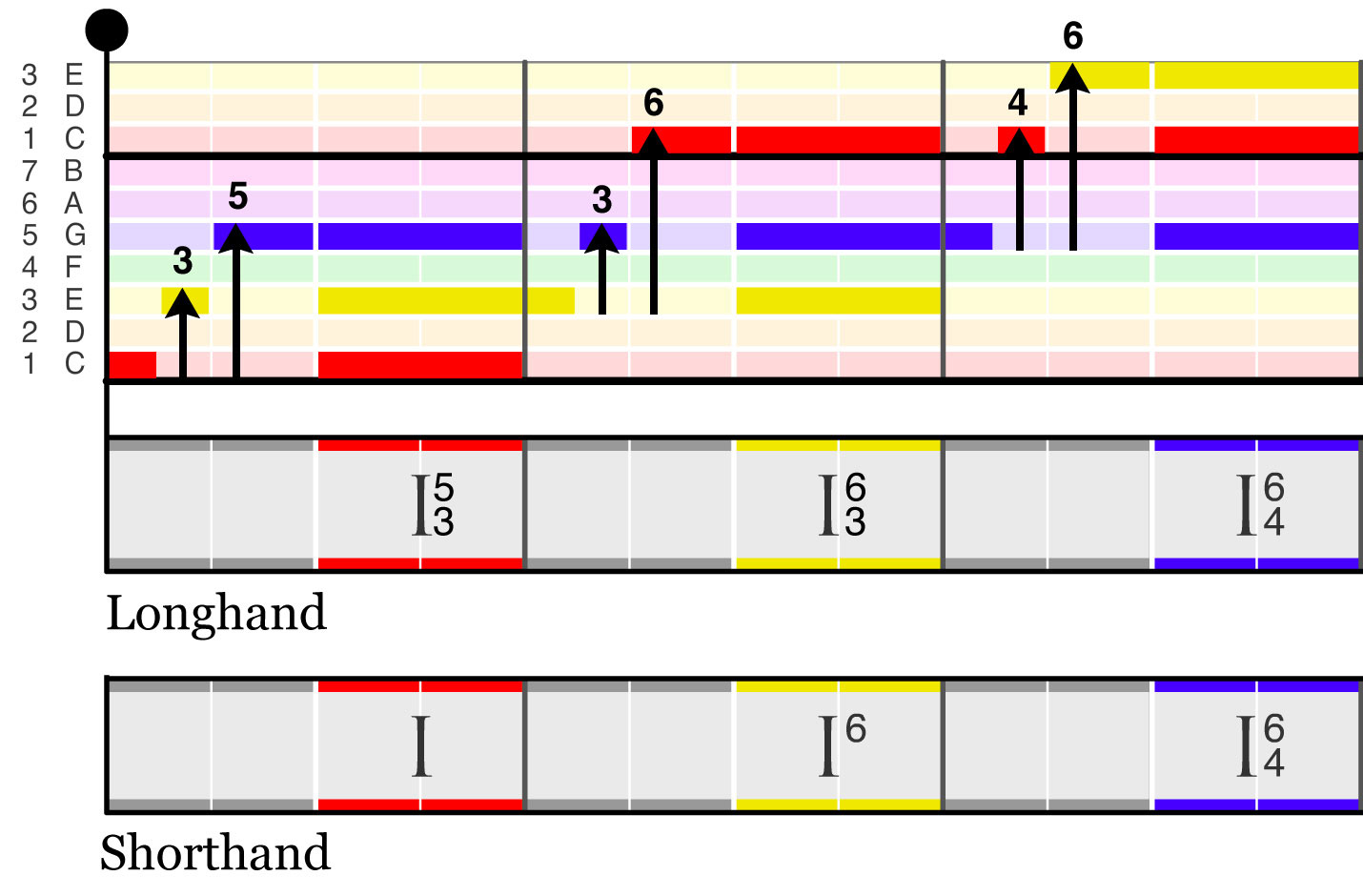
Below is a demonstration of a I chord in all its inversions, written as individual notes in the melody staff so you can hear how each one sounds:

The example below features a mix of root-position I chords and a I chord in first inversion. You’ll hear how the inversion gives the progression a subtle change in feel and flow, especially in the bass line.
Unlike voicing changes that simply rearrange a chord’s notes above the bass, inversions are considered musically distinct because they affect the chord’s function — especially how it connects to the chords around it.
Inversions of seventh chords
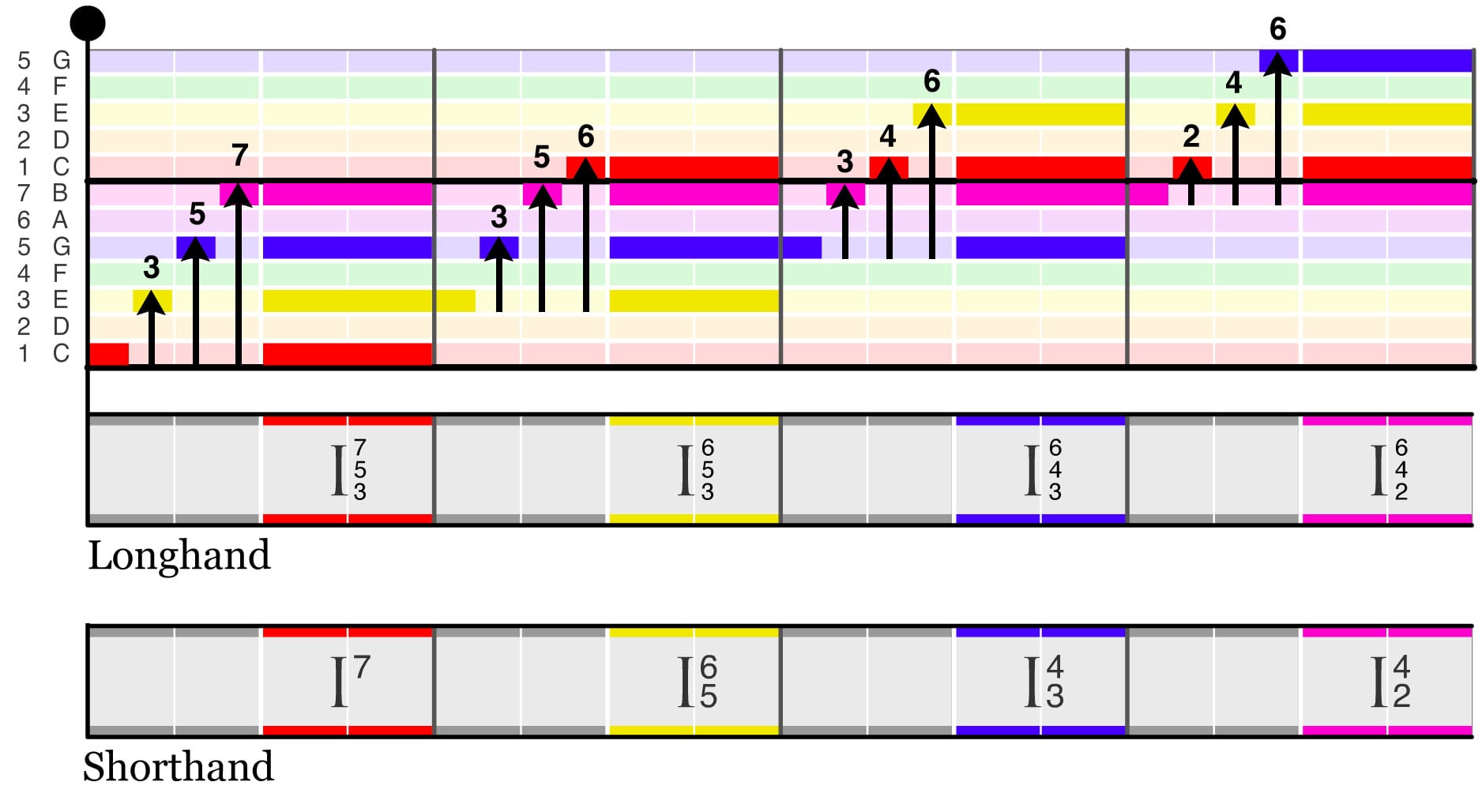
Since Seventh chords have four chord tones instead of three, there are three possible inversions apart from root position, and the intervals made to the bass note are different than for normal triads. The three inversions are as follows: first inversion 65, second inversion 43, and third inversion 42.
Other songs that use chord inversions
Click on the following songs to see their chords and melody in the TheoryTab database.