Interval
An interval is the difference in pitch between two notes — in other words, how far apart they are. Intervals are what give melodies their shape and chords their sound.
We describe intervals in two ways: by their size (how many notes apart they are) and their quality (which gives them their specific sound, like major, minor, diminished, or augmented).
For example, the interval between C and E is called a major third. It's called a “third” because it spans three scale degrees (C, D, E — scale degrees 1 to 3), and it's “major” because the notes are four half steps apart, giving it a bright, consonant sound.
Intervals are measured in half steps (also called semitones) — the smallest distance between two notes on a piano. A half step is the distance from one key to the very next (black or white). Two half steps make a whole step.
The pattern of intervals in the major scale is what gives each scale degree — and the chords built from them — their unique sound and function.
Below is a table summarizing the intervals up to an octave with the first note starting on a C on the piano.
| Interval | # Half-steps | Piano |
|---|---|---|
| Minor Second | 1 | 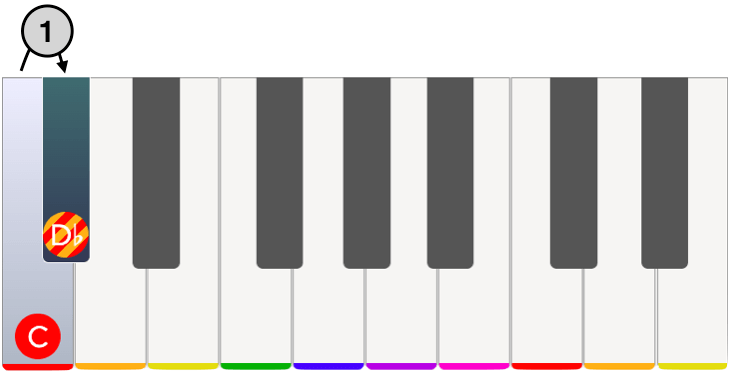 |
| Major Second | 2 | 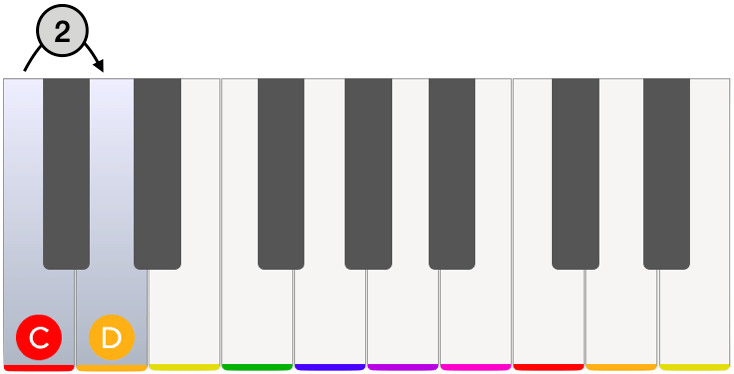 |
| Minor Third | 3 | 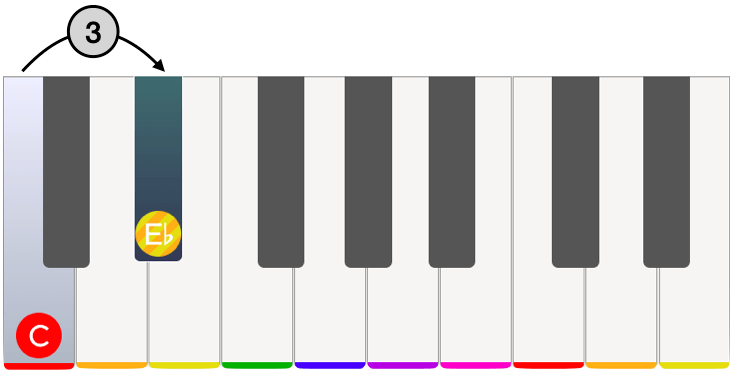 |
| Major Third | 4 | 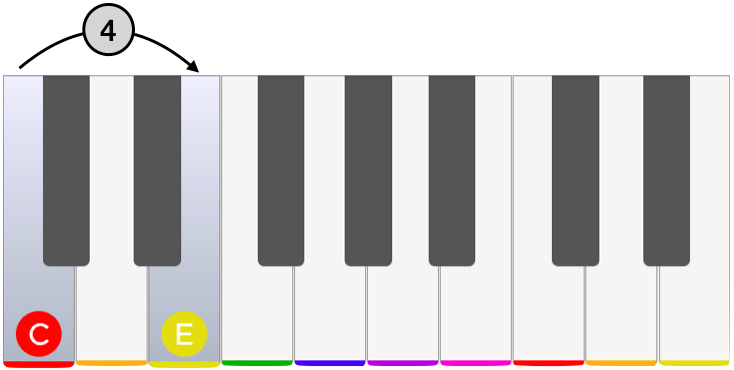 |
| Perfect Fourth | 5 | 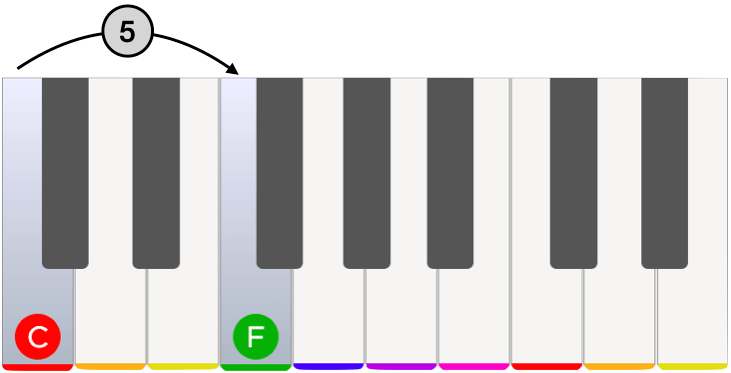 |
| Tritone | 6 | 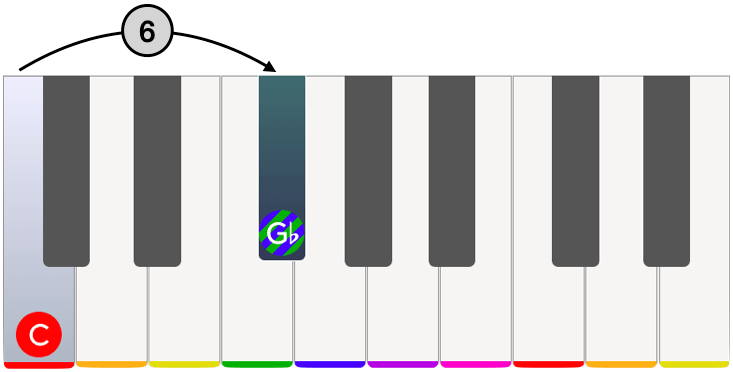 |
| Perfect Fifth | 7 | 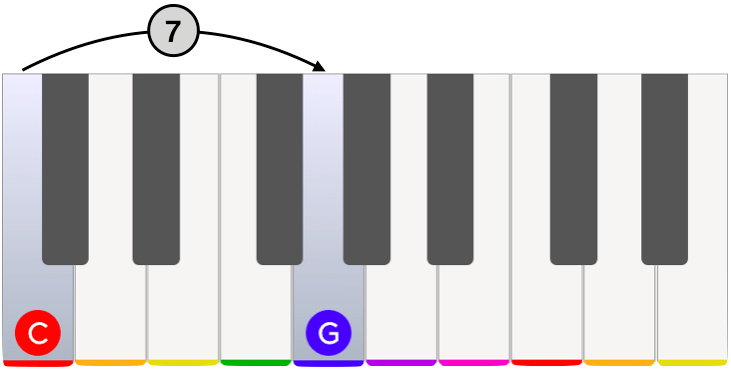 |
| Minor Sixth | 8 | 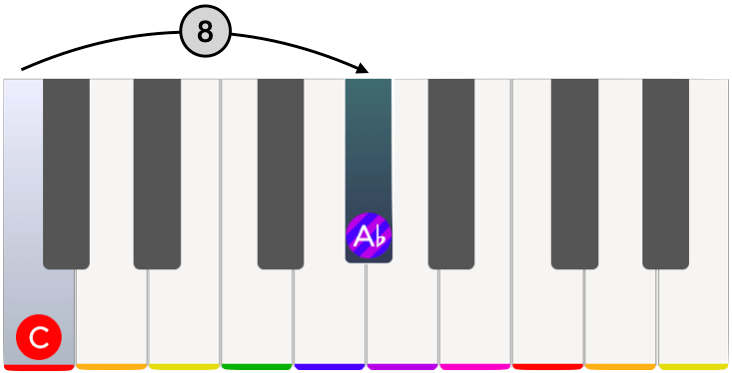 |
| Major Sixth | 9 | 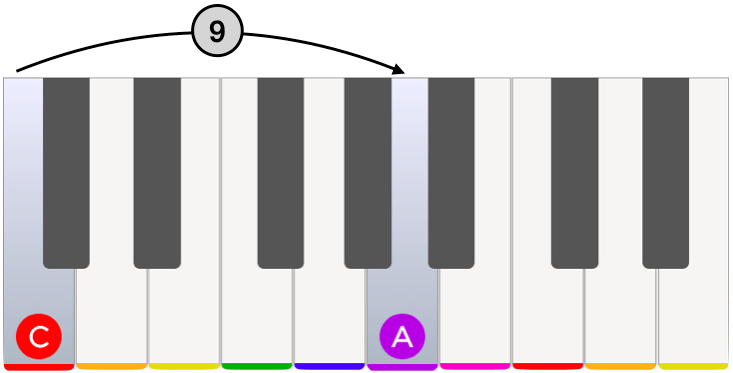 |
| Minor Seventh | 10 | 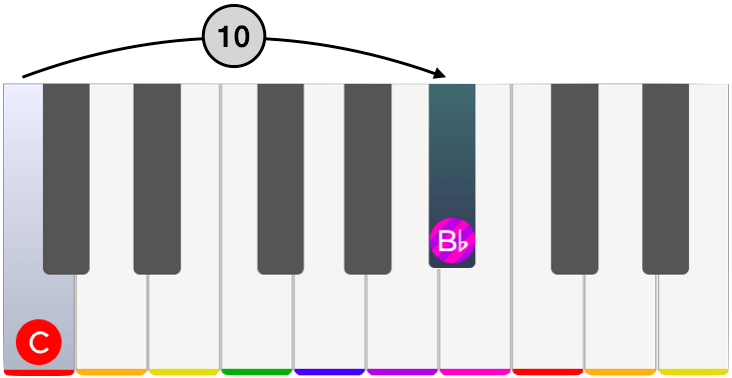 |
| Major Seventh | 11 | 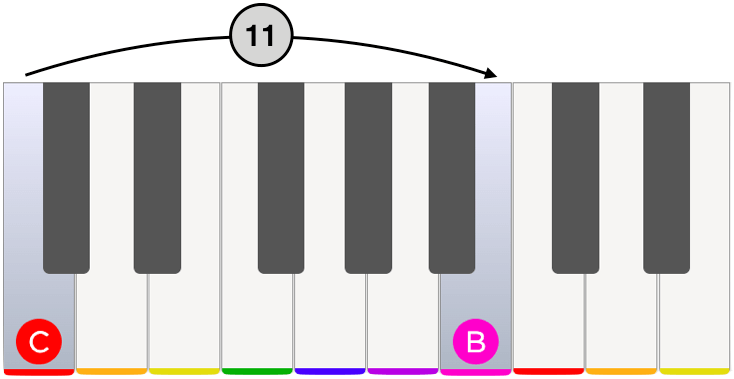 |
| Octave | 12 | 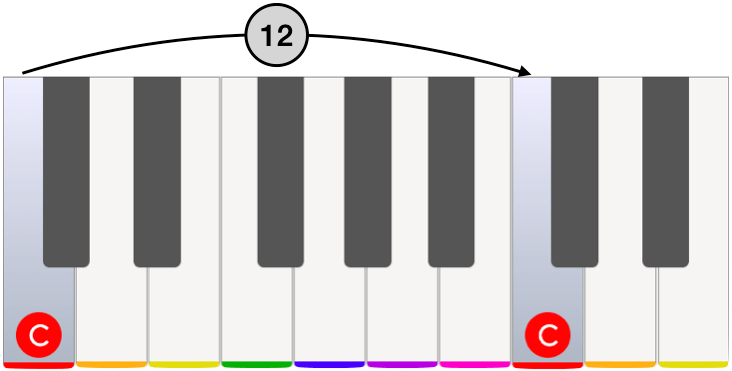 |