Roman Numeral Notation
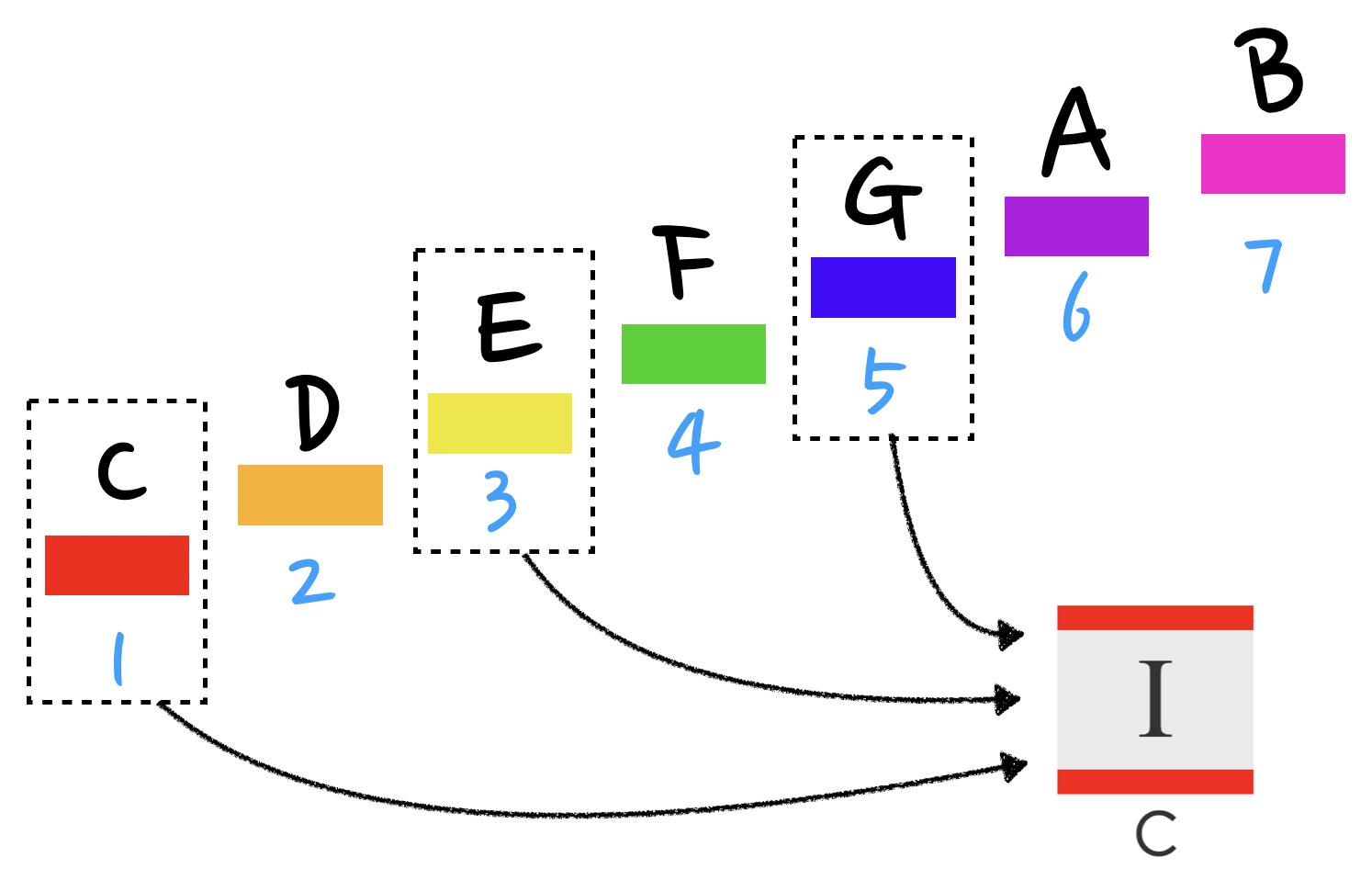
Roman numeral notation is a system used to label chords in relative notation. In this system, each chord is identified by a Roman numeral that corresponds to its root's scale degree within the major scale. For example, the I chord is built from scale degree 1 (the tonic), using scale degrees 1, 3, and 5:
Roman numerals also convey chord quality. Uppercase numerals represent major chords (I, IV, V), lowercase numerals represent minor chords (ii, iii, vi), and additional symbols like ˚ (diminished) and + (augmented) denote other chord types.
In Hooktheory’s system, chords are visualized as colored blocks labeled with their Roman numeral. The color of the chord block reflects the scale degree of the chord’s bass note — the lowest note in the chord, which may or may not be the root.
This coloring helps musicians quickly recognize harmonic function and voice leading. For example, when a chord is inverted or contains a non-root bass note, the color highlights the actual scale degree in the bass, giving you a more complete picture of how the harmony is behaving in context.