Transpositions
Transposition is the act of moving music from one key to another. This can affect how a song is heard, how chords function, and how melodies relate to the underlying scale. There are two primary kinds of transposition in music: parallel transposition and relative transposition.
Parallel Transposition
A parallel transposition changes the scale being used while keeping the same starting note. For example, C major and C minor are parallel modes—they both start on C but have different notes and a different musical feel.
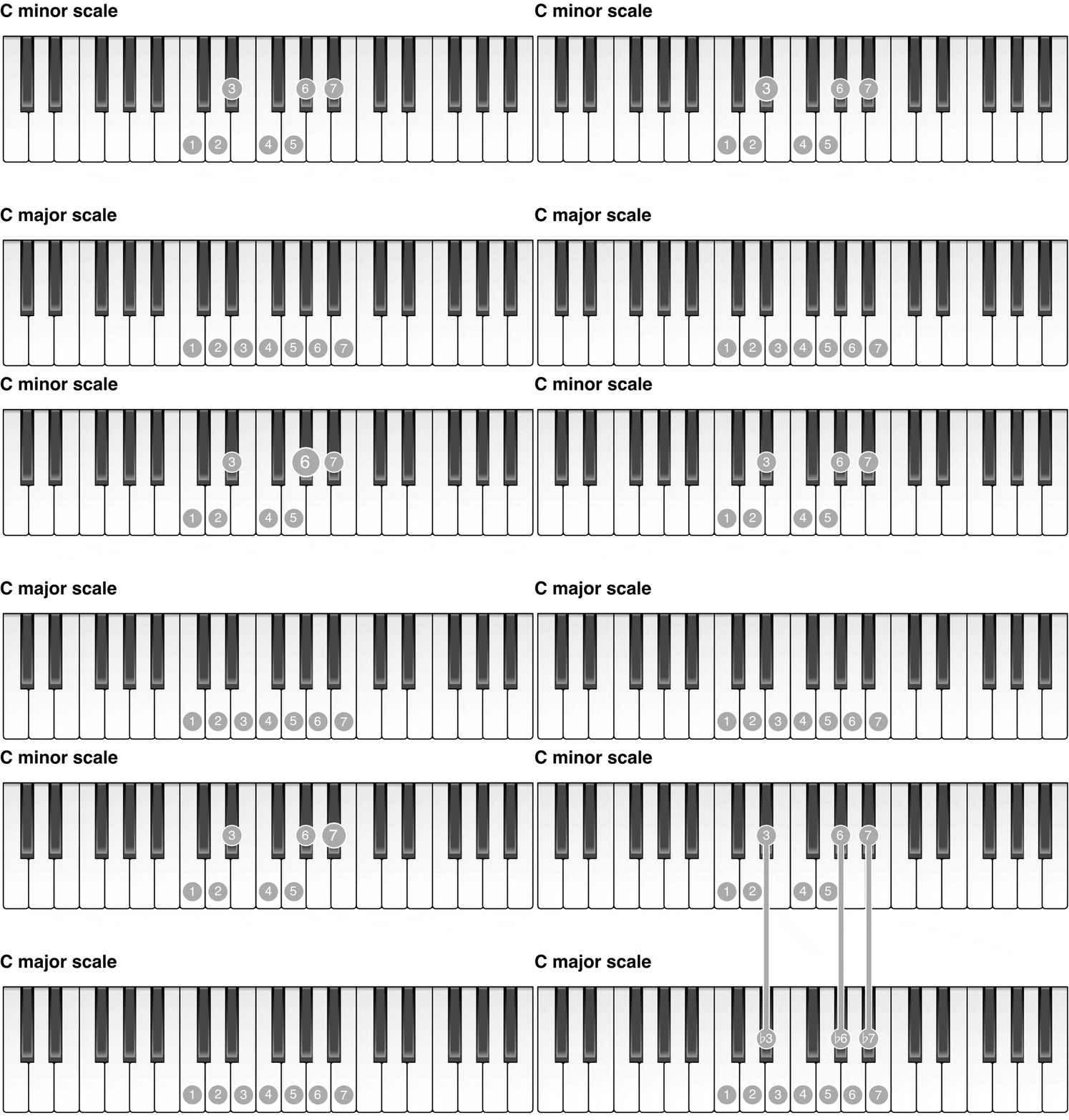 C minor scale
C major scale
C minor scale
C major scale
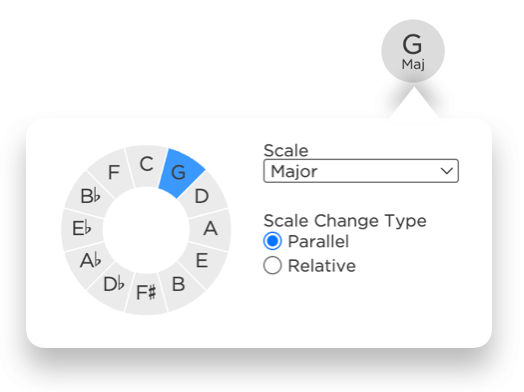
You can use the key selector in both Hookpad and the Theorytab database to apply a parallel transposition. This will change the notes of the song to fit the new scale, resulting in a different sound.
Below are two versions of “Let It Be” by The Beatles. The first is in C major. The second is after a parallel transposition to C minor.

Relative Transposition
A relative transposition keeps the same set of notes but changes which chord is treated as the tonal center. For example, C major and A minor use the exact same notes (all the white keys on a piano), but emphasize different home chords—C and A, respectively.
Relative transposition is useful when you want to view a chord progression from a different harmonic perspective, without changing how it actually sounds.
Here’s the intro to “One of Us” by Joan Osborne, shown in the key of A minor. The progression is i → VI → III → VII.
If you transpose this song to its relative major (C major), the chords are relabeled but the sound remains unchanged. Now A minor becomes the vi chord in C major, and the progression becomes vi → IV → I → V.
This perspective reveals that the song actually shares the same chords as the classic I → V → vi → IV progression—just starting on vi instead of I. Relative transposition can thus expose familiar patterns hidden in unfamiliar contexts.
Summary
- Parallel transposition: same root, different notes → changes the sound of the music.
- Relative transposition: same notes, different tonal center → changes how the chords are labeled but not how they sound.