Back to Music Theory Fundamentals

Roman Numeral Notation

Roman numeral notation is a system used to label chords in relative notation. In this system, each chord is identified by a Roman numeral that corresponds to its root's scale degree within the major scale. For example, the I chord is built from scale degree 1 (the tonic), using scale degrees 1, 3, and 5:
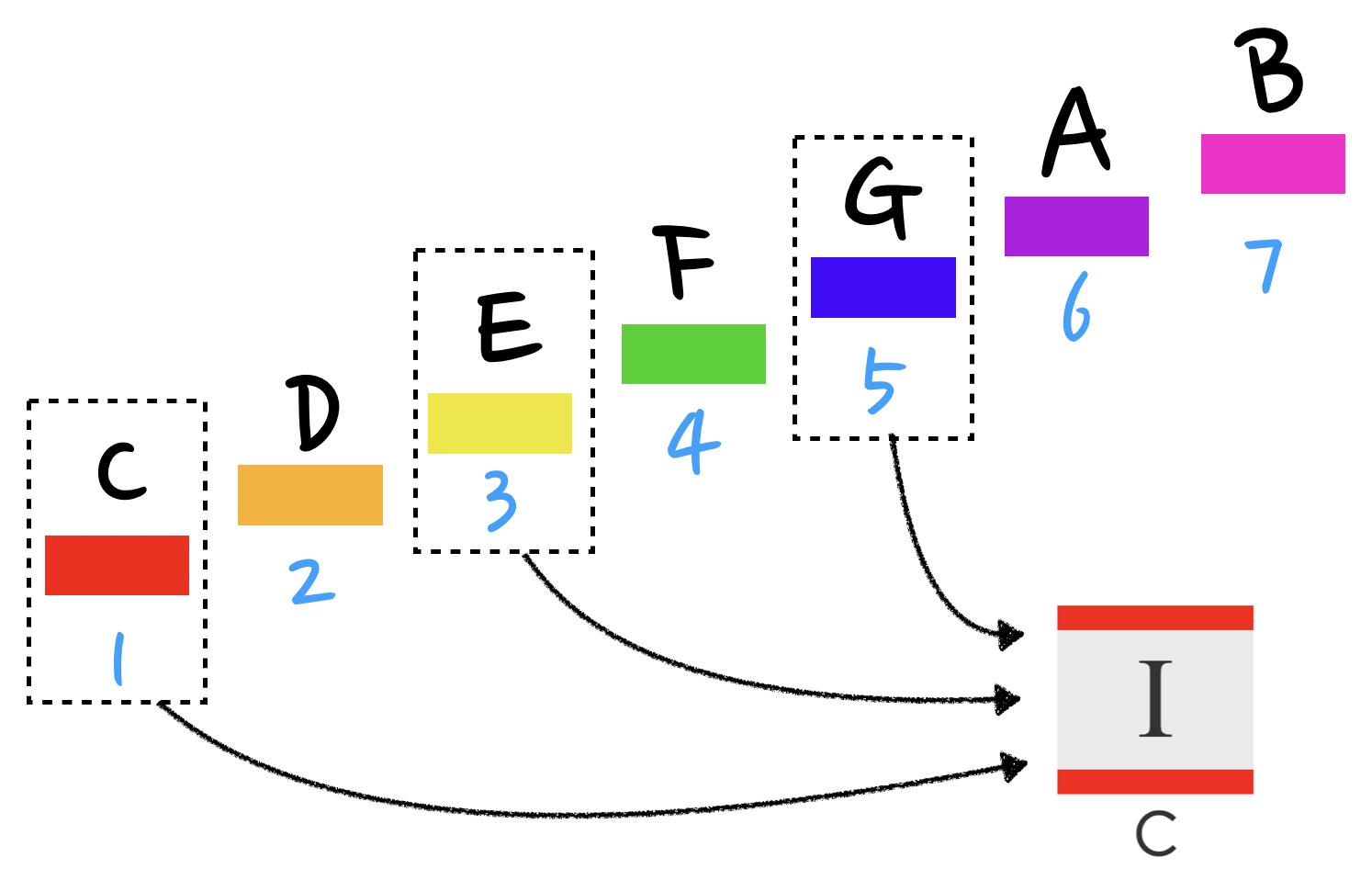
Chord built from scale degrees

Roman numerals also convey chord quality. Uppercase numerals represent major chords (I, IV, V), lowercase numerals represent minor chords (ii, iii, vi), and additional symbols like ˚ (diminished) and + (augmented) denote other chord types.

In Hooktheory’s system, chords are visualized as colored blocks labeled with their Roman numeral. The color of the chord block reflects the scale degree of the chord’s bass note — the lowest note in the chord, which may or may not be the root.

This coloring helps musicians quickly recognize harmonic function and voice leading. For example, when a chord is inverted or contains a non-root bass note, the color highlights the actual scale degree in the bass, giving you a more complete picture of how the harmony is behaving in context.

Contents

Music Fundamentals

The 7 notes that are the building blocks of a song
The spacing between notes

Functional Harmony

The study of how chords work
Establishing the set of notes and chords used in a song
A powerful framework for understanding how songs work
Numbering notes within a key
Numbering chords within a key

Basic Chord Concepts

Chords naturally found in the key
Different chord sounds and their function
Different ways of playing or arranging the same chord
Ending a musical idea

Melody

A song's rhythmic framework
Understanding melody tension over chords

Advanced Chords

Using a different bass note to change a chord's sound
Adding one more note to the basic chords
Chords that temporarily shift the harmonic center
A chord with built in tension and release
A chord with an added tone that enriches its sound
Using chords from parallel modes for contrast and emotion
Jazz harmonic technique replacing dominant chords with chords a tritone away
Altered (raised or lowered) notes create tension and complexity in chords

Advanced Concepts in Harmony

Two ways to change a song's key
Borrowing chords from another key
New scales and home base chords for a different mood
Using notes within and outside a song's key
Progressions that connect the bass